

I was at an event recently where we were invited to introduce ourselves at the outset and, in a slightly rash and playful moment, I took a deep breath and to the surprise of my fellow attendees I introduced myself as follows: “Hello, I’m a bee. I help to connect and network you to one another – I’m a pollinator.” Therein followed a slightly awkward pause… But it was worth it for the reactions I got: some people laughed; others were somewhat bemused; and some, who were acquaintances, humoured me with a knowing smile.
I often find it hard to explain my consultancy work. Even my father several years ago sweetly asked me: “Alice, how can I explain to my friends what it is that you actually do?!” I usually answer this question by simply saying I’m a researcher and (depending on who I’m speaking to) a cultural strategy / narratives / strategic communications / storytelling / philanthropy consultant.
But, that doesn’t capture the work I do in the ‘in between space’ – i.e. deeply understanding organisations and their motivations, aims and aspirations and then exploring where there are other organisations with the potential to connect, collaborate and work together.
Relational networking, trust building and catalysing connections really fires me up. It stems from a deep feeling that the problems we face are too big and too intractable to solve in our own organisations and silos. I truly believe that it is only by being better connected, by being more than the sum of our parts, that we can create the social and environmental changes we want to see in the world around us.
Network entrepreneurs
I still recall the spark of joy I felt years ago when I read a Stanford Social Innovation Review article by Jane Wei-Skillern, David Ehrlichman, & David Sawyer about ‘network entrepreneurs’, entitled ‘The most impactful leaders you’ve never heard of’. I finally felt like my network and trust building endeavours were being recognised and acknowledged as valuable. The authors write:
“The new leaders at the heart of some of today’s most sophisticated, large-scale solutions to the world’s social problems—network entrepreneurs—are undoubtedly some of the most accomplished leaders that you’ve never heard of, and they are ensuring that systems-level, collaborative efforts not only succeed, but thrive.”
They set out four principles of network entrepreneurship:
- Trust not control – i.e. relationships built on trust, mutual respect and integrity;
- Humility not brand – i.e. stewards who help to foster a healthy network culture;
- Node not hub – i.e. catalysing networks around a defined, shared purpose;
- Mission not organisation – i.e. ‘supporting all boats to rise’ – being motivated by maximum impact, rather than the success of an individual organisation.
Being a freelance consultant certainly comes with ups and downs. But a big advantage is the flexibility to reach out and connect to whoever I like and to value my time spent meeting people, encountering new organisations and networking across and between issues and industries. For this, I’m truly indebted to Unbound Philanthropy, where I work as a cultural strategy consultant. The team at Unbound understand that this tending of networks and connections requires investing in and, invariably, reaps countless rewards. It is truly a joy to see the fruits of my connections – when collaborations form, when innovation happens, when commissions emerge and when expertise is shared.
The more we learn about fungi, the less makes sense without them
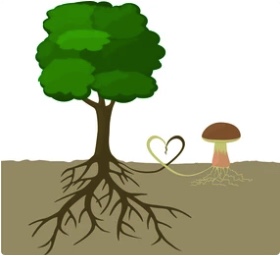
Given my passion for forging connections and strengthening networks, I was utterly enthralled from start to finish by Merlin Sheldrake’s bestselling book, Entangled Life: How fungi make our worlds, change our minds, and shape our futures.
Sheldrake describes with captivating flair the staggering capacity of fungi and their underground mycelium networks (i.e. the fine, white, branching threads of the fungi) stretching out sometimes over many square kilometres, to make complex decisions, to solve problems, to route resources and nutrients to the plants and trees that need it most, to find the quickest routes through a maze, to act in perfect symbiosis with plants (lichen is actually a symbiotic relationship between a fungi and a plant that has evolved to live together), to break down toxic substances, to produce chemicals that can bend our minds and alter our perceptions and states, the list goes on and on.
Sheldrake calls into question the classical scientific definitions of intelligence which anthropocentrically use humans as a yardstick by which all other species are measured. In relation to fungi, he writes:
“Because these organisms don’t look like us or outwardly behave like us – or have brains – they have traditionally been allocated a position somewhere at the bottom of the scale. Too often they are thought of as the inert backdrop to animal life. Yet many are capable of sophisticated behaviours that prompt us to think in new ways about what it means for organisms to ‘solve problems’, ‘communicate’, ‘make decisions’, ‘learn’ and ‘remember’.”
Merlin Sheldrake
You only have to watch The Last of Us (the skin crawling, fungal pandemic drama on HBO, based on the Naughty Dog video game) to imagine the deadly, havoc-wreaking power of mycelium-turned-bad. I watched it hot on the heels of reading Entangled Life and was utterly transfixed, peeping out from behind my sofa cushions.
Thankfully an apocalyptic fungal infection is just fantasy. But all of this begs the questions:
- What can we learn from the astounding ability of fungi to operate synergistically and achieve phenomenal outcomes through intelligent networks?
- How can we find new and evolved ways to learn, connect and share with one another?
- What more can we do to value and prize networking in the workplace?
- How can we understand how our work is intertwined and interconnected by carrying out ecosystem mapping over time?
For me, it was a mindset shift – learning to value relational power and connections and seeking out others who feel the same way. This was beautifully articulated by Ursula Le Guin who described how:
“To use the world well, to be able to stop wasting it and our time in it, we need to re-learn our being in it.”
Ursula Le Guin
So, who knows. Maybe I’ll pluck up the courage to introduce myself as a mycelium fungi network at a future meeting. Now that really would raise some eyebrows…
Network strengthening – top tips
Are you interested in channelling your inner bee/fungi and developing some network entrepreneurial spirit? Well here are some suggestions from me about how to get started:
- Explore ways to grow your immediate network. Reach out to someone you haven’t spoken to for a while, or who’s work interests you or crosses with your own. Try to meet in person if possible – your conversations will be richer and lead to greater levels of trust. My top tip for networking, If you’re not sure what to talk about, is just ask lots of questions and listen deeply. Generally people are always happy to talk about themselves and their work when others take interest! Listen out for where there are interconnections and overlaps with your work and that of others.
- Connect with people on LinkedIn. I have become utterly brazen about connecting with people who I think look interesting or have aligned interests to me. It has led to numerous conversations and coffees and some great onward connections. I have facilitated introductions which have led to new board members bringing connections and expertise, and even engineered an introduction which led to this photography exhibition being launched during Refugee Week 2021 – all thanks to LinkedIn! [You can connect with me here]
- Sign up to the Inter Narratives newsletter and join the online sessions curated by a stellar network of narrative specialists and practitioners. A unique feature of Inter Narratives is its efforts to share and learn across issue areas. A must for anyone working in narrative change and keen to hear what others are up to in this space.
- Apply to become a trustee for an organisation working on a cause that interests you. I have the deep honour of co-chairing the board of trustees at Counterpoints Arts and it has been a profoundly valuable experience in my career to date (incidentally Counterpoints Arts raises the bar for collaboration – it is truly woven into its DNA in a way that enhances its work and reputation no end). It might at first seem like being a trustee is a one way street – i.e. you give up your time and offer your expertise to a charity. But I have found instead that, when it works well, it is a deeply symbiotic relationship. You give your guidance and time, but in return you gain extended networks of trusted contacts, which can open up new avenues and it is a tremendous opportunity to learn and grow alongside your fellow board members. This is particularly valuable if you’re freelance and miss the collegial nature of being part of a team of co-workers.
- Read widely about how to strengthen networks and ecosystems – US-based Erin Potts and Tracy Van Slyke are phenomenal thought leaders in this space. Check out: at the speed of trust and Narrative infrastructure for narrative immersion.
Reading / watching
- I loved this video from Channel Four of people with opposing views debating cancel culture before and after taking magic mushrooms. Thanks to the folk at Larger Us for sharing this gem in your newsletter recently – I loved watching this!
- Merlin Sheldrake’s fungi-tastic website is here.
- Another book I very much enjoyed recently is: The Secret Life of Trees by Peter Wohlleben – more inspiration around ecologies and networks of trees, including the friendships they form and the ways they communicate (yes, really!).
- What else are you reading / listening to that involves themes of pollination, ecology, ecosystems etc.? Do let me know and I will keep adding to this list!
 Alice Sachrajda
1 Pingback